How to keep your child’s voice forever (before it changes)
How to save your child’s voice: what to record at every age, simple phone recording tips, and where to keep voice notes so they survive every phone upgrade.
 Selva, founder of TrueKin11 min read · Updated
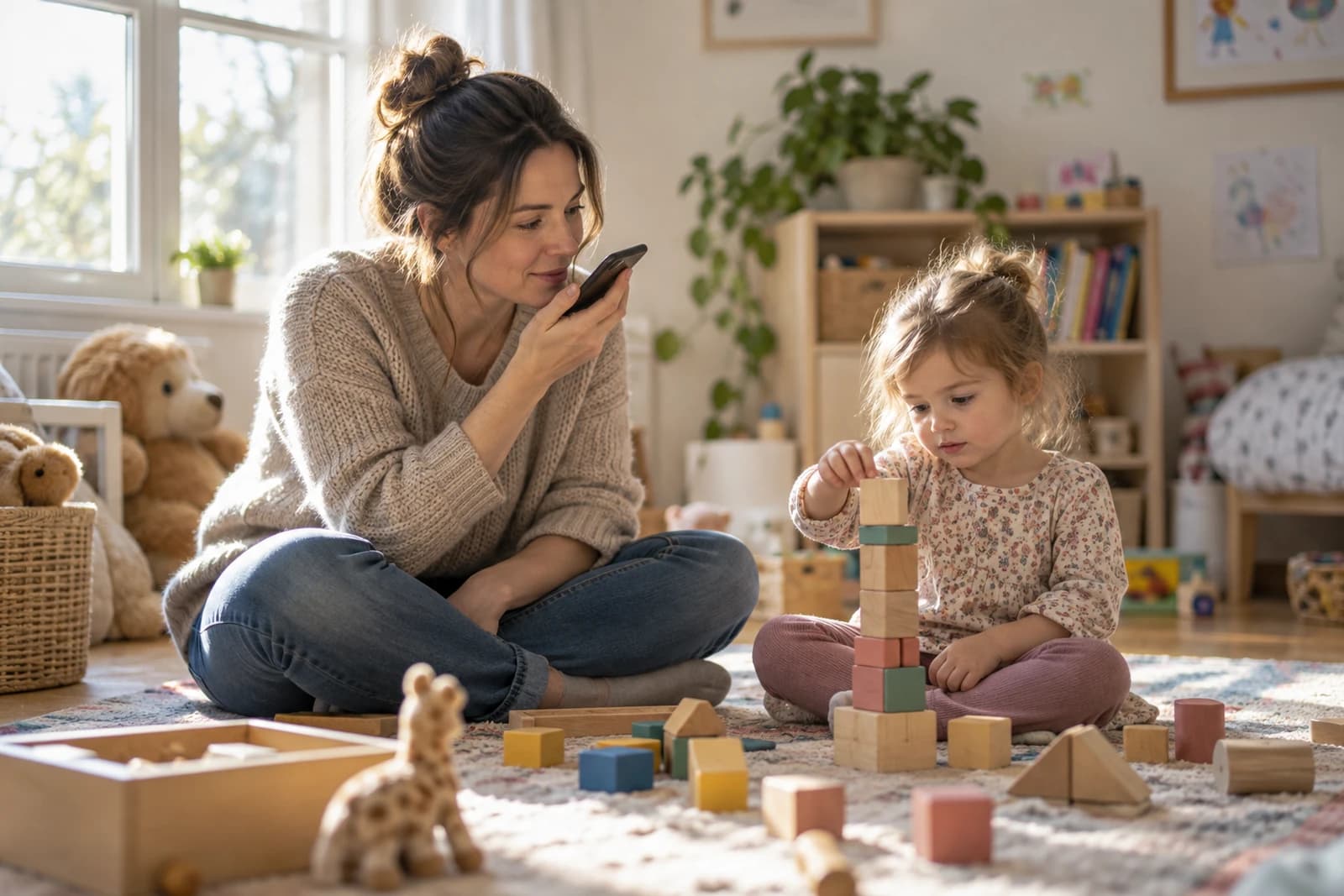
Short answer
To save your child’s voice, record short, natural clips on your phone every few weeks: babbling, first words, funny mispronunciations, songs and bedtime chats. Record in a quiet room, name each file with the date and your child’s age, and back it up in at least two places off your phone, so it survives upgrades and becomes a gift they can keep.
The simplest way to save your child’s voice is to record short, ordinary moments on your phone regularly, label each clip with the date and their age, and back the files up somewhere other than your phone. That is the whole method. The rest of this guide is about doing it well: what to capture at each age, how to get clear sound without fuss, and how to make sure the recordings still play in twenty years.
Most of us have thousands of photos of our children and almost no audio. Yet ask any parent of a teenager what they miss most about the toddler years and many will say the voice. The squeaky “nana” for banana. The serious little explanation of how dinosaurs sleep. Photos show you what they looked like. A recording brings back what it felt like to be in the room.
Why does a child’s voice change so quickly?
A child’s voice changes because their body, brain and language are all developing at once. The vocal folds and throat grow, speech becomes clearer, and vocabulary and accent shift with every new year of school and friends. The voice you hear today really is temporary.
There are a few stages most parents notice:
- Baby sounds: coos, squeals and babbling that turn into the first recognizable words.
- Toddler speech: short phrases, invented words and mispronunciations that usually fade as speech matures.
- Early school years: longer sentences, storytelling, and an accent and vocabulary picked up from classmates and teachers.
- Puberty: the larger, more obvious change. Many boys’ voices drop noticeably, and girls’ voices also deepen and mature, though usually more subtly.
Each stage disappears gradually, which is why it sneaks up on you. One day you realize nobody in the house says “aminal” anymore, and you cannot quite remember how it sounded.
What should I record of my child at each age?
Record whatever is most “them” at each stage: sounds in babyhood, invented words in the toddler years, and stories, opinions and songs as they grow. Ordinary moments are usually more precious later than performances.
| Age | What to capture | Easy moment to record |
|---|---|---|
| 0–12 months | Coos, giggles, babbling, first “mama” or “dada” | Nappy or diaper changes, bath time, morning wake-up chats |
| 1–2 years | First words, naming things, animal noises, mispronunciations | Reading a picture book together and pointing at things |
| 3–4 years | Questions, made-up songs, invented words, funny logic | Car journeys, bedtime, “tell me about your day” |
| 5–7 years | Stories, jokes, reading aloud, explanations of how things work | Reading their first books, retelling a film |
| 8–10 years | Opinions, plans, favorite things, conversations with you | The yearly questions interview, a walk together |
Babbling and first words
For babies, the trick is patience. Start recording before anything happens, put the phone down nearby, and just keep talking to them. Babies often “answer” back-and-forth conversation, so your voice prompts theirs. You will capture a lot of quiet, but you will also catch the giggles.
Mispronunciations and invented words
These are the recordings parents treasure most and remember least. Keep a running list in your phone notes of your child’s funny words (“pasghetti”, “hostipal”, “lellow”) and set up moments to capture them, for example by pointing at the spaghetti at dinner and asking what it is.
Songs and bedtime chats
Record them singing the song they sing constantly right now, even if it drives you up the wall. Bedtime is gold too: children often say their most thoughtful, funniest things in the dark. Leave the phone recording quietly on the bedside table during a chat and you will be surprised what you get.
The same questions, every year
One of the best things you can do is ask the same handful of questions on every birthday. Played back years later as a series, the recordings show how their voice, thinking and sense of humor changed. Keep the questions simple:
- What’s your name and how old are you today?
- What’s your favorite food right now?
- Who is your best friend, and why?
- What do you want to be when you grow up?
- What makes you really happy?
- What do you think I do all day while you’re at school?
- What’s something you’re really good at?
Me: What’s your name and how old are you?
Child: I’m Theo and I am four and three-quarters. No, I’m four today. Just four.
Me: What do you want to be when you grow up?
Child: A dinosaur doctor. For the big ones. Not the small ones, they bite.
Me: What makes you really happy?
Child: Pancakes. And you. And when the dog does a sneeze.
How do I record my child’s voice on my phone?
Use your phone’s built-in voice recorder app or video camera, find a quiet room, hold the phone close, and keep each clip short. You do not need a microphone or special app to make recordings that will sound lovely for decades.
- Quiet room first. Turn off the TV, dishwasher and washing machine. Soft furnishings help; a bedroom or sofa corner sounds warmer than a tiled kitchen.
- Get close. Keep the phone within about an arm’s length, and closer for babies. Point the bottom of the phone, where the microphone usually is, toward your child.
- Avoid handling noise. Rest the phone on a cushion or table rather than shifting it around in your hand.
- Record a little extra. Start recording before you ask the question and let it run a few seconds after. The pause before a child answers is part of the charm.
- Keep it natural. Children clam up the moment they feel they are being recorded. Chat, play, and forget about the phone.
- Short beats long. Thirty seconds to three minutes is ideal. Lots of short clips are easier to label, share and listen to later.
- Include yourself. Your voice asking the question is part of the memory. Years from now your child may love hearing you as much as themselves.
Which file format should I use?
Use whatever your phone saves by default and keep the original file. On iPhone, the Voice Memos app saves M4A files; Android recorder apps commonly save M4A or MP3. Both are widely supported and fine for keepsakes. If you want an extra archival copy, WAV is an uncompressed format that is larger but very future-proof. Avoid converting files back and forth, since each conversion of a compressed file can lose a little quality.
Video works too. A short video gives you voice and face together. If you mainly care about sound, a voice recording is often better, because children ignore a phone lying on a table far more easily than one pointed at them.
How should I name and organize voice recordings?
Name every file with the date first, then your child’s name, age and a few words about the clip. A consistent pattern means files sort in order automatically and you can find any moment in seconds, even years later.
A simple pattern that works well:
2026-10-21_Theo_4y_birthday-interview.m4a
2026-11-03_Theo_4y_pasghetti.m4a
2026-12-24_Theo-and-Ava_4y-1y_singing-jingle-bells.m4a
Put the date in year-month-day order so files sort correctly on any computer. Create one folder per child, and inside it one folder per year. If siblings appear together, include both names. That small bit of discipline is what turns a messy camera roll into an archive.
Where should I store voice recordings so they last?
Store your child’s voice recordings in at least two places that are not your phone, such as a cloud storage folder and a computer or external drive. Phones are lost, broken and replaced every few years, and voice memo apps do not always move cleanly to a new device.
A practical setup many families use is often called the 3-2-1 approach: three copies of each recording, on two different kinds of storage, with one copy kept away from home. For most parents, that means:
- The original on your phone, as long as it is there.
- A copy in cloud storage that you check you can log into and download from.
- A copy on a computer or external drive that you update every few months.
Before you upgrade your phone, check that your voice memos have actually copied across, and play one or two on the new device. Also watch for apps that store recordings only inside themselves with no easy way to export. If you cannot get the original audio file out, it is not really safe.
Another option is to keep recordings in a place built for memories rather than files. In TrueKin you can save voice notes alongside photos, video and letters for each child, and export everything any time as ordinary audio files. Each memory is encrypted with a key unique to your account. It works in the browser on any phone or computer, so a phone upgrade does not affect it. It sits nicely alongside a digital baby book if you are already keeping one.
How can I turn voice recordings into a gift for my child later?
Choose a handful of favorite clips, add a short note from you about each one, and set them aside to give on a meaningful day, such as an 18th birthday, a graduation or the day they become a parent themselves. Hearing their own toddler voice, and yours, can be one of the most moving gifts a grown child receives.
Some ideas that work well:
- A birthday interview playlist: every year’s answers to the same questions, in order, given on their 18th.
- A “first words to first day of school” collection for their first day at secondary or high school.
- Lullabies and bedtime stories you recorded for when they have their own baby.
- Grandparent voices: record grandparents reading a favorite book or telling a family story. Our list of questions to ask your grandparents is a good starting point.
With TrueKin you can pick exactly when each recording arrives: a specific date, a birthday, an age such as their 18th, or a moment like graduation. On the day it arrives by email as a private link that opens in any browser, with no account or app needed. Grandparents and your partner can add their own recordings to the same delivery, and you can change the date any time until it is sent. Read more about how to send a message to the future.
Dear Ava,
These are some of my favorite sounds in the world. The first one is you at nine months, laughing because the dog sneezed. You laughed so hard you got hiccups.
The one marked “lellow” is you at two, telling me every single yellow thing in the supermarket. We were there for forty minutes.
I wanted you to have these because one day you’ll forget how you sounded. I never will.
Happy 18th. Love, Dad
Why I started recording my daughter
When my daughter was born, I created an email address for her and planned to send her notes, photos and the occasional voice memo, so she would have them when she was older. I meant every word of it. But it was clumsy: separate log-ins, attachments that would not play, nowhere to keep track of what I had sent. After a few months I stopped, and I regretted the sounds I had missed.
That is why I built TrueKin: to make saving a voice note for your child as easy as sending a message, and to make sure it arrives on the day you choose. Whether you use it or a simple folder system, the important part is the same. Press record this week. Their voice is changing while you read this.
Step by step
- Set a simple recording rhythm. Aim for one short clip every couple of weeks, plus extra on birthdays and milestones. Put a repeating reminder in your phone so it becomes a habit.
- Record in a quiet room. Turn off the TV and washing machine, hold the phone about an arm’s length away or closer, and let your child talk or play naturally.
- Name each file clearly. Use a consistent name such as the date, your child’s name, their age and a few words about the clip, so you can find it years later.
- Back it up off your phone. Copy every recording to at least two places that are not your phone, such as a cloud folder and a computer or external drive.
- Ask the same questions every year. Pick five questions and ask them on every birthday, so you build a series that shows how their voice and thinking change.
- Turn it into a gift. Choose favorite clips and set them aside for a future birthday or milestone, with a short note from you about when each was recorded.
Frequently asked questions
How do I record my child’s voice on my phone?
Open your phone’s built-in voice recorder or camera app, find a quiet room, and hold the phone within an arm’s length of your child. Start recording before you ask a question and let it run a little after. Keep clips short, then name each file with the date and your child’s age and back it up.
At what age does a child’s voice change?
A child’s voice changes gradually throughout childhood as speech, vocabulary and the vocal folds develop. Toddler mispronunciations usually fade in the early school years, and the most noticeable change comes around puberty, when many boys’ voices drop and girls’ voices mature more subtly. Recording regularly captures every stage.
What is the best way to store voice recordings of my kids?
Keep at least two copies off your phone: one in cloud storage you can download from, and one on a computer or external drive. Use clear file names with the date, name and age. Check recordings transfer properly whenever you change phones, and avoid apps that will not let you export original audio files.
What file format is best for saving voice memos?
The format your phone saves by default, usually M4A or MP3, is fine for family keepsakes and plays almost everywhere. Keep the original file rather than converting it repeatedly. If you want an extra archival copy, WAV is uncompressed and very widely supported, though the files are larger.
How often should I record my child’s voice?
A short clip every couple of weeks in the baby and toddler years captures most of the change, because speech develops fast then. From school age, monthly clips plus a yearly birthday interview are plenty. Set a repeating phone reminder so it happens without relying on memory.
How can I give my child their voice recordings as a gift?
Pick favorite clips, add a short note about when and why each was recorded, and save them for a meaningful day such as an 18th birthday or graduation. You can store them on a drive, or use a service that delivers recordings on a date you choose, so they arrive even if you forget.
Published